Ten Suggestions For Support In An Emergency Of PAT in Leamington Spa
Emergency assistance for Portable Appliance Testing (PAT) is designed to address critical situations in which electrical equipment safety problems pose immediate risks that cannot be left to linger for regular maintenance cycles. These services are not based on a risk-based and planned PAT test but instead respond to urgent incidents that require immediate attention, like electric shocks or appliance fires. They also deal with health and insurance audits which need immediate attention. Under the Electricity at Work Regulations 1989 and the Health and Safety at Work Act 1974, employees must take immediate action to reduce the risk of serious and imminent danger, making reliable emergency PAT assistance a crucial component of organisational risk management. The quality of this emergency response–measured by availability, technician competence, and action effectiveness–directly impacts workplace safety, regulatory compliance, and potential liability. In order to evaluate the electrical service provider's emergency response capabilities it is essential to review their response protocols, resources, and past experience dealing with high-pressure situations.
1. 24/7/365 availability with dedicated emergency Contact Protocols in Leamington Spa
In order to provide genuine emergency assistance, dedicated contact channels must be available at all times. These channels shouldn't be part of standard corporate telephone lines. It is standard to have a monitored hotline that directs calls to an on-call coordinator who is able to mobilize resources at any time including holidays, weekends or even in the night. The call handling procedures should be defined clearly, including the callback time limit (e.g. 30 or 30 minutes), and escalation protocols. If there is no dedicated number for emergencies or evidence that calls go to voicemail when it is not during business hours, customers are susceptible to electrical fires.
2. Guarantees of Emergency Response Times clearly defined in Leamington Spa
Providers are asked to provide a range in response times which reflects the degree of risk. Priority 1 Irregular Danger: On-site presence between 2 and 4 hours of incidents involving fire, electric shock or smoke. Priority 2 (Urgent Failure): Attendance in 24 hours for critical faults identified during audits, or operational problems for equipment that is considered safety-critical. These obligations should be made explicit in the service level agreement that include explicit consequences if targets are not met. For instance credit or penalty clauses.
3. Technical Competence Requirements of Emergency Responders
Emergency technicians require additional training and experience in comparison to regular testers. They must hold advanced certifications with City & Guilds2377. They must also be trained (GS38) in safe isolation procedures and fault diagnosis, as well as forensics investigation, in addition to other areas. The ideal situation is that they have an electrical engineering background that allows them to diagnose faults beyond the standard testing procedure. The service provider should be able to prove their team's credentials and that they regularly participate in exercises that simulate scenarios.
4. Scope of Emergency Services: Investigation, Isolation and Certification in Leamington Spa
The comprehensive emergency assistance comprises three phases. Immediate Investigation to determine the root of the issue; Safe Isolation including advice on the quarantining of affected areas and finally, formal Certification that documents the actions taken for insurance and compliance purposes. The assistance must include the creation of a report on the emergency that details all findings and corrective actions. This report will serve as important evidence to present to HSE investigations, or claims for insurance.
5. Equipment and Resource Availability for Emergency Scenarios in Leamington Spa
Emergency response vehicles must serve as mobile workshops, equipped with: calibrated testing equipment, extensive spares (plugs (fuses), cables) as well as devices for replacement (for crucial equipment), hazardous situation isolation (lock out tag-out kit) and personal protective gear (PPE). It is better to let technicians handle emergency situations in the first place than to simply identify problems which require follow-up appointments.
6. Integrating the Incident Reporting (RIDDOR) and Considerations for RIDDOR in Leamington Spa
Professional emergency personnel are aware of their reporting obligations as per to the Reporting of Injuries, Diseases and Dangerous Occurrences (RIDDOR) Regulations. They can help clients decide whether an incident is dangerous enough to report (e.g. an electrical short circuit that can cause an explosion, fire or an explosion) and must be able to provide the required technical evidence. The advisory role is a critical part of emergency support, helping dutyholders meet their legal obligations following major incidents involving electrical safety.
7. Post-Emergency System Review with Preventative Recommendations in Leamington Spa
Following emergency resolution, companies should conduct an official review to discover the root of the problem and systemic weaknesses. This could include analyzing whether the existing risks assessments and testing frequency remain in place, and recommending changes to maintenance schedules and identifying common PATterns across different types of equipment or sites. This proactive approach can transform an emergency response that is reactive into an opportunity to enhance the safety management system.
8. Communication Protocols for During and After Emergencies in Leamington Spa
In situations of high pressure, clear communication protocols are vital. Providers must guarantee the following: acknowledgement of initial contact within 15 minutes, prompt notification of dispatch of technicians with ETA, confirmation on-site arrival, and reporting preliminary findings within an hour. In the 24 hours following resolution, an extensive emergency report will be issued. Meetings should discuss the findings and preventative measures.
9. Transparency of the pricing for call-outs in emergency situations in Leamington Spa
It is crucial to have a clear understanding of the pricing for emergency work to avoid any disagreements. Contracts should clearly outline the following: emergency response charges (typically PS150-3000), rates per hour for emergency response (often 1.5-2x rates of standard) and costs for spare parts, and any additional charges in the event of a call-out outside of normal hours. Transparent pricing structures prevent the possibility of financial shocks during an emergency and permit duty-holders to make informed choices when approving urgent work.
10. Documentation and Evidence Preservation in legal proceedings in Leamington Spa
Many times, situations with legal implications arise during emergency response. Technicians need to be educated on evidence preservation, including photographic documentation of malfunctioning conditions, safe storage of damaged components and detailed contemporaneous note-taking. The resulting emergency report must be forensically robust in its accuracy, capturing the condition of equipment prior to intervention and the actions that were taken because this report may be required for insurance disputes, HSE investigations, or possible legal actions. Take a look at the best portable appliance testing in Leamington Spa for site tips.

Top 10 Tips On Response Time For Fire Extinguisher Servicing in Leamington Spa
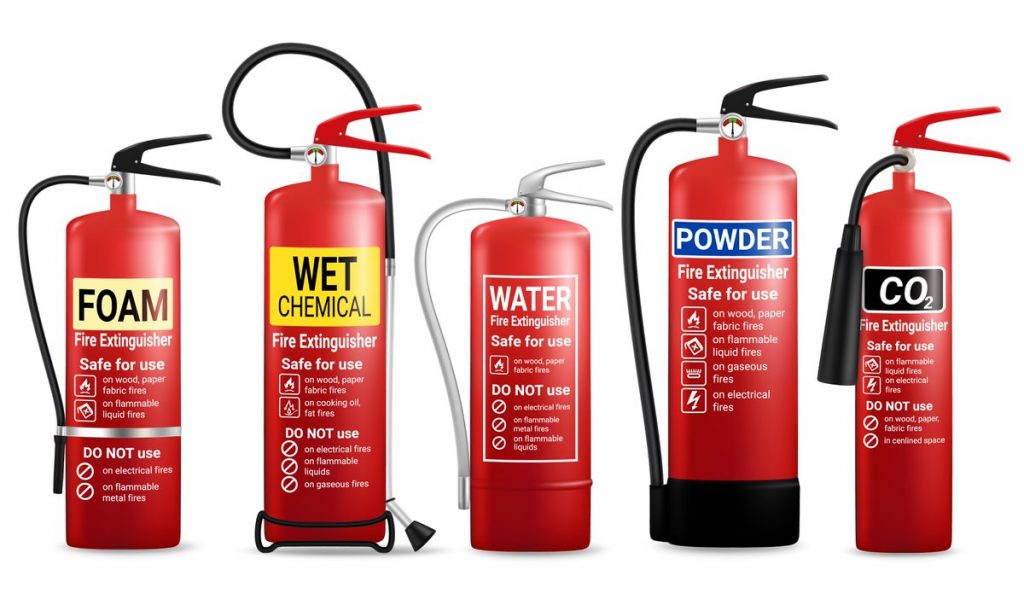
Concerning security in the event of fire, response time for servicing isn't a mere convenience. It's a crucial component to ensure the compliance of legal requirements and operational security. The Regulatory (Fire Safety) Order of 2005 requires the upkeep of firefighting equipment in a condition that is effective. Equipment that is damaged, missing or discarded in this time constitutes a clear breach of this obligation. The ability of a provider to respond swiftly to scheduled or emergency requests directly affects the risk you face. It also impacts the legitimacy of insurance and operational continuity. The slow response can leave the premises unprotected, disrupt the business process during audits, and reveal poor due diligence. To evaluate a service provider’s response capabilities, including those for routine calling outs in emergency situations, it is important to understand the various service tiers available, geographic constraints as well as contractual obligations and operational capabilities that enable quick and efficient response.
1. Scheduled service appointment lead times in Leamington Spa
The effectiveness of a provider's routine annual service is the first indication of its efficiency. A well-organized business will reach out to you within 4-6 weeks prior to your certificate expiry to schedule the next annual service. The business should be flexible in scheduling and should provide specific timeslots for AM and PM or a date that is confirmed for the engineer to visit. Inability to confirm a date (e.g. needing reservations 3+ months in advance) or excessive lead times could indicate poor resource management.
2. Emergency Call-Out Response Tiers and Definitions
Not all calls that are reactive are created equal. The most reliable companies have a clear range of emergency responses, each with the guarantee of a certain time. A standard urgent request (e.g. an emergency request for a missing or faulty extinguisher) may have a 24 to 48 hour timeframe for response. A high-priority emergency (e.g. several units being disposed of following an incident that is minor or a critical defect found during an audit) is best dealt with quicker, typically within a couple of hours or even the next day. In order to efficiently manage expectations, it's essential that the contract or agreement clearly defines these categories as well as their specific target time for response.
3. Local engineers' coverage and availability in Leamington Spa
Geographical Leamington Spa is directly linked to response times. A national firm may have a wide brand presence, but is dependent on a network regional engineers. It is crucial to determine if they have engineers based locally to your postcode or if engineers are travelling across a large distance that could impact regular and emergency response times. If a provider has a strong network of local engineers, they can respond quicker and with less cost. Ask, "Where's your nearest engineer in our postcode?"
4. Guaranteed Response Timelines in Service Level Agreements (SLAs) in Leamington Spa
It is essential to verify whether your Service Level Agreement (SLA) promises response times. A vague guarantee to "attend promptly" is useless. A robust SLA should include measurable Key Performance Indicators. These contractual guarantees permit you to initiate action if your service provider fails repeatedly in their obligations.
5. Communications Protocols for Helpline Dedicated to Helpline in Leamington Spa
Communication is essential to ensure an immediate response. It is essential to know the process of handling service requests. Is there a customer service hotline or email address dedicated to urgent inquiries? Do they have a monitoring system during office hours, as well as outside of these hours? The top providers offer an immediate telephone number to a coordinator who can dispatch an engineer right away and without having to wait in a crowded waiting list. This is crucial in the event of an emergency.
6. Out-of-Hours and Weekend Support Capability in Leamington Spa
Like faults, fire incidents don't follow the standard 9-5 working hours. Access to support is vital in highly risky environments like 24/7 data centers, manufacturing, and care homes, or following an incident occurs outside of normal working hours. It is important to check whether the company offers a true 24/7 emergency callout service or if the service is limited to work days. If they offer after -hours support for emergencies, ensure that you ask about any associated costs and their guaranteed response time in case this differs from the support they provide during daytime hours.
7. Fault Resolution vs. Initial Attendance Time
It is crucial to differentiate the duration of the first response (an engineer attending the site to determine the issue) and the time required to resolve the fault (the period when the device is repaired fully or replaced, and it is compliant). A service provider may arrive quickly to condemn a faulty extinguisher, but take several days to locate and install a new one, leaving the Leamington Spa not secured. Your SLA needs to address both parameters. The ideal scenario is for a service provider to fix common problems on the first visit. For example, replacing one extinguisher which is missing.
8. Effect of Response Delays on Compliance and Insurance in Leamington Spa
It is crucial to be aware of the consequences of an ineffective response. Every day that an extinguisher fails or is not working is a day that your company is in violation of the Fire Safety Order. This could result in an Fire Authority audit taking enforcement actions. It is also possible that your insurance policy will be conditioned on you maintaining compliance with laws regarding fire safety. A significant delay in rectifying the issue can be used by an insurance company to disqualify any claim in the case that there is a fire. They could argue that you did not provide sufficient protection.
9. Capacity of providers and management of workload in Leamington Spa
The speed at which you can respond is an indication of the management team's abilities. Find out their ratio of engineer-to-client and how they handle peak workloads. A provider with a high load will notice that their technicians are behind schedule during routine visits, while they lack the capacity to handle emergency situations. In the process of tendering be sure to inquire with the firm how they would react to a situation that required the replacement of a number of extinguishers at your site. It will be evident by their answers if they are capable of quick, large-scale responses.
10. Monitoring, Reporting and Performance Review in Leamington Spa
A professional provider doesn't just make promises, they evaluate their performance against these promises. The provider should be equipped with systems to monitor all calls and their response time. They must also be willing to provide you with periodic performance reports showing they are in compliance with the SLAs in your contract. This transparency allows for you to conduct an evidence-based review of the service they offer and hold the company accountable for maintaining high standards that are essential to your fire compliance. Check out the top rated Leamington Spa fire extinguisher servicing for website info.